Thursday, September 27, 2012

Managing individualized learning

Photo by Sarah Kranz
A lot of people talk about how American education is faltering, our schools are outdated, and that we need to tailor learning for each student. All well and good in theory. But how exactly do you manage this? To be clear, I'm not talking about parking kids in front of computers and marching them through tutorials and standardized test prep materials. Khan Academy videos have their place, but that's not what I'm talking about. That's manageable.

I'm wondering about evaluating and assessing students who are engaged in projects that they choose based on their passions. The learning is genuine and powerful, their products are professional quality. But as I embrace this approach as an educator, the classroom atmosphere can sometimes totter toward chaos. The issue I'm grappling with is how to keep track of all that individualized work?

A little background. Half of my teaching load is more traditional English classes with a bit of digital writing and research blended in; the other half of my schedule is made up of an assortment of media production classes. My traditional classes are easier to manage; the photography and new media classes, not so easy. For example, in my new media class one of the things we do is document our school on a daily basis in whatever medium is most appropriate to tell the story. That means that some of the students right now are laying out the September issue of a news magazine, a couple of them are shooting last minute photos for that magazine, while still others are editing footage into video packages. Some people work more than others during class time; others do an amazing amount of work outside of school but not so much in school. One girl stayed after school yesterday for a couple of hours taping interviews for somebody else's project. Right now a student has come into my classroom for the second time today to work on the news magazine layout because she has a free period. But for all the self-driven, self-motivated and talented students I have, there are others who need help every step of the way and take a large investment of time to keep them going.

The need to get a handle on this isn't just for my benefit. Sometimes a student in the media class needs a photo that was shot by a student in another class. Currently to find this, the students ask me, and that's where chaos can sneak up. I'm working on devising (or adapting) a system that helps my students and I navigate all this individualization.

Different tasks, different levels of engagement, different media, different work loads, different maturity levels. If you work in an environment like this, how do you manage the work flow?

Thursday, September 13, 2012

Assignment: What's in your pocket?

Keys by me
Punya Mishra has a lot to tell us about design in general and educational design in particular, how artifacts give meaning to our lives and how they are tied to our identity. So partly inspired by Punya's teachings, Tim O'Brien's The Things They Carried, and partly out of curiosity, I'm setting out to see what things have meaning to my students. Specifically what things they carry with them through the school day.

Although I consider myself not all that materialistic, I'm beginning to see how things matter.

To get a sense for how this assignment will go, I wrote a reflection of sorts (see image below).

The Things I Carry


Wednesday, September 05, 2012

Ideas before and after their time

Long ago Dieter Rams gave timeless advice about what makes good design: things like usefulness, aesthetics, honesty, and simplicity. Because I'm a packrat, I happened to have an old catalog from the 1960s on one of my bookshelves. Although it might be tempting to say that these products have design flaws, they remind me of how time can also affect a design's efficacy.

Exhibit A: Today we watch videos on smartphones & portable DVD players. The item at left was an idea that was ahead of its time. Someone 50 years ago realized that viewing movies wouldn't always be a communal activity. Still, this product probably wasn't the most practical.

Exhibit B: Although having your social security card on a keychain might seem like a bad idea now, it's possible that it wasn't such a bad idea in the 1960's. An example of an idea that's now "behind its time."

Friday, August 17, 2012

Bringing the elections into the curriculum

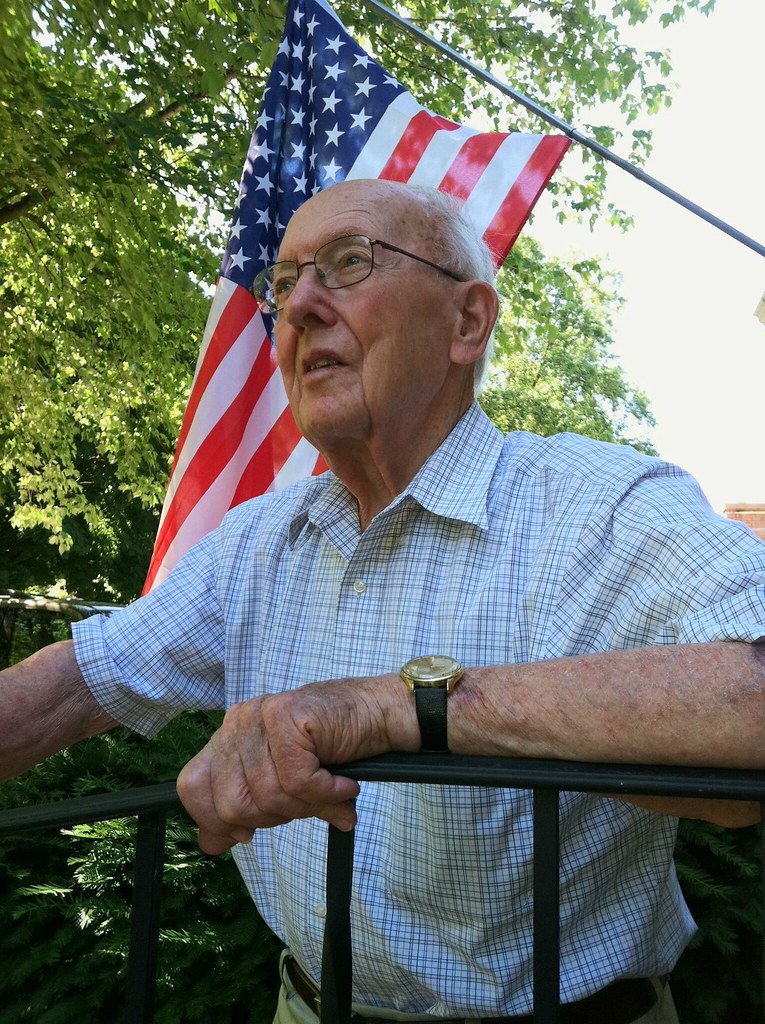
My dad on July 4 by me
As a new school year approaches I'm wondering how other educators are going to incorporate the elections into the curriculum. For what it's worth, here are my thoughts so far.... Those who teach students who will be old enough to vote in the 2012 elections should check out the U.S. Election Assistance Commission's "A Voter's Guides to Federal Elections"; the National Conference on Citizenship is group whose mission is to increase the United States' civic health.

In my classes for the next few months we'll be looking at the rhetoric and spin of the political season. One of my favorite set of resources is Fact Check and its companion sites Fact Check Ed (devoted to teaching students how to become smart consumers of information) and the humorous Flack Check.

Nonpartisan sites to help students clarify their stance on the issues:

Partisan but worth a look

For research about new media and politics among youth, see the MacArthur Foundation's Youth and Participatory Politics and the Center for Information & Research on Civic Learning and Engagement (CIRCLE) from Tufts University. NoLabels is an organization devoted to getting our elected officials to work together instead of the partisan bickering and posturing we're witnessing currently. C-Span had an interesting panel discussion on Youth Civic Engagement through Social Media in May of 2011.

Finally, in my class this fall we'll be reading UnSpun: Finding Facts in a World of Disinformation, analyzing the style and rhetorical features of documents/speeches like the Declaration of Independence, the Gettysburg Address, JFK's Inaugural Speech, Letter from Birmingham Jail, Civil Disobedience, and a couple of things by George Orwell: 1984 and the essay "Politics and the English Language."

Relevant tweeters: @civicMIT @NoLabelsOrg @Politifact @ProCon_Org

I'm always looking for more good resources though....


Friday, August 10, 2012

One idea for writing from database research

Symmetry by Grace Haley
A colleague just asked me how I go about having my students do research with periodicals, journals, and databases. On a recent episode of Teachers Teaching Teachers in March 2012, Cable Green, Mary Lou Forward and some others encouraged me to open up my teaching, so in the spirit of the Open Education Resources movement, here's essentially what I wrote in the email. This assignment is a two-day sequence where students research and write an argumentaive essay after searching through two academic databases that are available through a lot public libraries or schools.


Steps to an argumentative essay based on your initial research of a controversial issue

1. For 15-20 minutes read through the Opposing Viewpoints database, read an article, and highlight the most important pieces of evidence.  Paste that into your Google Doc that you started on Friday, add the parenthetical reference, and copy the citation at the bottom of the article.


2. For the next 15-20 minutes read through the articles found in the EBSCO database, read an article, and highlight the most important pieces of evidence.  Paste that into your Google Doc that you started on Friday, add the parenthetical reference, and copy the APA citation found at the top of the article.


3. For the next 40 minutes, write a draft of an argumentative essay keeping in mind the structure diagram that you have in your notes.

  • Begin with a general statement, and then have a focused thesis in the first section
  • Have at least one concession/counter-concession. Remember that good argumentation often does this more than once
  • Order the evidence from weakest to strongest
  • Consider concluding with EITHER the difference the evidence made to your opening paragraph OR an “echo” of the opening idea, (aka completing the “frame”)


4. Be sure to include parenthetical references as in-text citations, and a separate references section using APA style.

N.B. This photo and all photos on this blog are taken either by my students or me.

Wednesday, August 08, 2012

What badges taught me ... so far

My first open badge
Mozilla's Open Badges project has implications for how K-12 classroom teachers like me think about our students' online compositions. In my pre-internet teaching days, for example, assessment was more of an individual thing – writers' were formatively and summatively evaluated on their own work. But now that students are composing in online spaces like Youth Voices, composition is more social. With this in mind, I've read a number of instructive conversations that have sprung up after the announcement of the Badges for Lifelong Learning Competition winners.

One of the biggest things I learned is that there are a lot of ways people are approaching badging systems, and Barry Joseph's document provides a helpful overview. If you're not up to speed on the whole badges movement, I recommend the Mozilla badges wiki. I should also note that many have cautioned that badges aren't for everyone and that there are other types of legitimate assessments that still need to be explored regarding participatory learning. That said, here's my first take on how reading about badges has helped my thinking about my students' online compositions.

1. Badges can help distribute assessment. Sure, I'm a classroom teacher, and I still have to assign grades at the end of the course. However I shouldn't be the sole issuer of badges. One of the things that underpins a lot of the badges movement is that some assessment should be done by peers, and this seems especially appropriate in online communites. Cathy Davidson expresses her enthusiasm for "peer-driven systems as an alternative to some of the rigid, limited, standardized forms of evaluation." Henry Jenkins is "deeply skeptical" of the massive push for badges going on right now because, among other things, "many young people have deep ambivalences about the kinds of 'credit' adults choose to give (or withhold) around their activities." Still, I can't help thinking that with some peer-driven systems, we could see, as Dan Hickey describes,"self-evident examples of learning ecosystems that have been fundamentally transformed or entirely created by digital badges." My challenge: handing over some of the assessments to the peer community of students.

2. Badges can recognize individual and social achievements.  For example on the individual level I think there's something valuable when a student posts a discussion that is well-crafted and results in a meaningful conversation, even if it's only with one other person. But just as valuable is a discussion post that results in a robust conversation among many members of the community, even if the original post is not all that well crafted.  David Theo Goldberg writes that badges work "within contexts that socially support them and where their users are invested in their significance." Andrea Zellner says that badges "should be operationalized in a way that incentivizes social learning and community involvement." My challenge: finding the balance between recognizing individual contribution and significance to the community.

3. Badges can make learning objectives visible. John Martin comments that "many of the standards we follow are rather nebulous and abstract for learners, particularly in the younger levels. With badges we can track and reward achievement as a progression rather than having students wait until something big like a report card to identify how they are performing." Barry Joseph, who through Global Kids and other programs has implemented badges for a number of years now, feels that if we offer badges to learners we have to be clear about how to earn them. Barry writes, "Our learning objectives, previously invisible within our lesson plans, are now made visible, empowering the youth to hold us accountable." My challenge: being more explicit about the steps students can take to becoming more effective communicators.

My web navigator badge
Henry Jenkins warns us that if we decide to adopt badges we need to do so only if "it's the right thing for your group." So with Youth Voices in mind and as a way to address each of the challenges I laid out above, I have a few initial thoughts about experimenting with badges.

  1. Students could be involved in the distribution of assessment through something as simple as a "Like" feature for discussion posts and comments. But in addition to a simple "Like" or "Thumbs up" icon, I'd like to see an accompanying text box where the user gives a quick explanation as to why they like or don't like a post, comment, or reply. Archived, these rationales could be used for more reflective writing later on.... I also think judicious use of user stats could help distribute assessment too.
  2. Base some badges on roles like the curator and moderator roles in the Scratch community Mitchel Resnick writes about. I could see additional roles like mentor and editor working in the Youth Voices community.
  3. How can I make learning objectives more visible? (to illustrate I'll use something from Paul Allison's "Youth Voices Badges and Quests" document). One of the learning objectives I have for my students is that they become effective at collaborative argumentation, but how might I make this more visible to students? Example: here's some text from the Common Core about argumentative writing that speaks to this learning objective: "Engage in authentic conversations using valid reasoning and relevant and sufficient evidence" (second part of EA Writing 12.1). One way to do that is to "reply to other people's comments on a discussion that you started on Youth Voices or one that you commented on earlier." But even here, there are different ways to "level up." For example, a student might directly quote from another so that it's clear what they're commenting on; I think directly quoting another is important because oftentimes writers aren't sure what it is exactly in their discussion post that people are commenting on. However directly quoting another writer may or may not further the conversation. If I just agree with you by repeating what you wrote, there's not much more to say – end of conversation. But if I agree (or disagree) with you and provide new evidence to support my point of view, we are likely to enter into a robust conversation.
--------

Thanks to +Sheryl Grant for sharing the reading list below with me to get me started:

Wednesday, July 25, 2012

Getting students to appreciate what's taught in school

Photo by [a]clark
One of my favorite questions a student can ask is "why are we doing this?" If students aren't shown the practical value in what they're learning, many of them will tune out. We can have the most organized curriculum, gather fascinating resources, and create an optimal learning atmosphere, but if students don't value what's going on in the classroom, it's all for nothing. That's the problem that Jere Brophy addressed in his 2008 article.

Brophy railed against curriculm that is mile-wide but inch-deep, and rightly pointed out that a lot of students aren't engaged because much of school learning doesn't have "significant life application value." Brophy notes that John Dewey saw it coming long ago – that "most K-12 content originated as practical knowledge derived through situational problem solving, but as it got systematized within what became the disciplines, it got formulated more abstractly and separated from its situated origins." Therefore, although teachers may see the value in what we do in K-12, it's not always so obvious to our students.

Brophy goes on: "If a curriculum strand has significant value for learners, it will be because its content network is structured around big ideas that provide a basis for authentic applications to life outside of school." Similarly, in How to Get – and Keep – Someone's Attention, a 7/25/12 Time magazine article, Annie Murphy Paul advises us to bring our ideas down to earth by "explaining how they connect to your listeners' lives" if we want people to listen. The same holds true for the classroom.

When students are autonomously motivated to engage with K-12 content, they do so voluntarily because they see good reasons for doing so and then activate schema networks for valued purposes. Brophy makes a point of saying that it's not just simply a matter of connecting with students' interests. Instead, he believes that the valuing of school learning begins with curricular aims, an articulation of the knowledge, skills, values, dispositions, and appreciations of what it is being learned. He argues that our curriculum shouldn't just about the what and how, but about why anybody ought to learn it.

The kinds of qualities he emphasizes: absorption, satisfaction, recognition, making meaning, self-expression, self-realization, making connections, achieving insights, and aesthetic appreciation.


Whether it's the subjects I teach or the rewards learners receive, I'm taking a critical look at my own intended outcomes to make sure (in addition to knowledge, skills, attitudes, and dispositions) that I'm including appreciations of why what is being taught is worth learning.

Monday, July 23, 2012

Motivation to learn

Do Badges Kill Motivation, second in a series

Photo by Sloanpix
One of the things that got me delving into this topic is the idea that badges could ruin any intrinsic motivation students have. The idea of intrinsic motivation in school is worth exploring. Whether it's Deci and Ryan's self-determination theory or Csikszentmihalyi's flow theory, I have seen plenty of instances of intrinsic motivation in my career – when a student is completely absorbed in reading a book, when a photographer is shooting a series of portraits in our classroom studio, or when a student writer is putting the finishing touches on a story they care about – yes, I'm happy to report that I've personally seen quite a bit of intrinsic motivation in my time.

What usually happens next, however, is that the bell rings, class ends, and the student reluctantly moves on to the next classroom. I've also been on the other end, for example when student artists trudge into my class after leaving a canvas incomplete in their art class, or when musicians wander in fifteen minutes late because they lost track of time in their band class.

The problem with these examples, unfortunately, is that they don't happen often enough. Maybe other educational sites are full of students who are instrinsically motivated all-day, every day, but in my experience the majority of students are not in the zone the majority of the day.

Jere Brophy (in his book Motivating Students to Learn) argued that intrinsic motivation isn't a realistic model of student motivation anyway, since most educational activities are compulsory, at some point the performance will be evaluated, and often situated in very public settings. Instead Brophy argues that student motivation to learn should be the goal we strive for. He believed that intrinsic motivation refers primarily to the affective experience – enjoyment of the processes involved in engaging in the activity; in contrast, motivation to learn is is more of a cognitive response – attempts to make sense of information and master the skills and habits of mind that the activity develops. He wrote: "it is helpful to view motivation to learn as a schema – a network of connected insights, skills, values, and dispositions that enable students to understand what it means to engage in academic activities with the intention of of accomplishing their learning goals and with awareness of the strategies they use in attempting to do so."

Brophy felt that educators should capitalize on students' existing motivation (for example, the inquiry approach to writing), and also make the best of our opportunities to stimulate and socialize their motivation to learn.

He cites expectancy x value theory as a way of approaching motivation, and by extension I think it's a way to approach using badges in education. The expectancy x value model of motivation holds that the effort we're willing to expend on a task is a product of (a) the degree to which we expect to be able to perform the task successfully if we apply ourselves (and the rewards therein), and (b) the degree to which we value both the task and the rewards of that task. It's considered a product because no effort will be invested if one factor is missing entirely.

So what does this have to do with badges? I'll use the idea of "basic or foundational" badges to illustrate. On the one hand, if students recognize the value but don't feel capable of meeting the demands of the task, they're likely to do things to protect their ego (disassemble, in Brophy's words). If on the other hand they're confident in their abilities to do the task but don't value it, they're likely to just go through the motions (evade). Engagement happens when students see value in the task and are reasonably confident in their ability to succeed at that task.

I think I understand the expectancy part of the equation well enough. After all, most career educators are able to choose tasks that are within our students Zone of Proximal Development, but it's the value part of the equation that's a little trickier for me. How do we get students to value learning?

Brophy's 2008 article, "Developing Students Appreciation for What is Taught in Schools," speaks to that. More on that next time.

Tuesday, July 17, 2012

Do badges kill motivation?

from Knewton.com
As Paul Allison started talking about incorporating badges into Youth Voices, it has me thinking more about the gamification of education in general and badges in particular, and what effect they might have on students' motivation. On the one hand part of me says that badges could stifle students' intrinsic motivation, that students might focus more on getting badges than on learning, and that this extrinsic motivation will ultimately have negative consequences. But on the other hand, it's hard to disagree with the rationale that badges are about "helping people of all ages learn and display 21st century skills, unlock career and educational opportunities, and find new life pathways." And the more I learn about the winners of this year's DML competition, the more of a believer I become. But still I wonder....


Even the people at Mozilla Open Badges on the FAQ section on their wiki are asking "how does introducing badges affect learners' motivations? If learners were already intrinsically motivated, how do we avoid 'crowding out' those motivations with an extrinsic badge system?"

For the next few days I'm on a quest of my own. I'll be reading and writing about what educational research has to say about motivation and how that might inform the use of badges in the classroom, I'll be talking to some people who know more about these topics than I do, and I'll be browsing websites like gamifyingeducation.org and the gamification wiki. 


In the meantime I'm wondering what people think about badges in education: what effect do badges have on learners' motivation?

Monday, July 16, 2012

Bringing the White Paper into the classroom

Lately I've been thinking about a genre to include in my English classes for next year - the White Paper.

This idea is a continuation of an earlier post I wrote about blogging your research as a way to breathe life into the traditional research paper as it's commonly taught in schools – an attempt to reconcile two genres, blogging/connected writing and the research paper. I've noticed that when students write interest-driven posts on Youth Voices, they participate in numerous discussions over the course of a term that touch on a recurring theme that matters to them. What if students periodically were to pull back and compose a white paper on their enduring interests? Here's a definition of a government white paper that I came across: "White Papers have tried to perform the dual role of presenting firm government policies while at the same time inviting opinions upon them." In my mind this is good research because, while it may be finished, it's not yet done. Good research continually informs practice and vice versa. What if our students explored this "dual role"?

This seems like another type of academic writing that's worth a closer look. The Purdue Online Writing Lab has a section devoted to resources for the White Paper.  

Here are a couple of examples of the kind of research writing I want my students to do this year, White Papers that continue to inform my own teaching and learning: Confronting the Challenges of a Participatory Culture and Living and Learning with New Media.

Tuesday, May 22, 2012

Students as teachers, part two

My seniors last day of school was Friday. One of the last things I had them do was to share the secrets of their craft, another time when the students become teachers. Their videos showcase their excellent work, but also show how articulate they are. Check out their work:

  • Tyler, talking about lighting and portraiture 


  • Sylvia on environmental portraiture 
  • Alex on action photography 
  • Kyra discussing her passions for food and photography
  • Shea on photographing horses

Tuesday, March 27, 2012

Students as teachers, part one

Photo by Ben Harvey
As we near the end of the school year, my upper level students will take on more of the teaching load. For example my advanced photo students are going to produce videos that profile their expertise. I've been planning the activity for a while, but when Ben (a student in the class) showed us the recent video he shot while he was photographing his water blur series, it became clear that the many talented photographers I work with every day need to become mentors.

Some of the things they'll teach:
Sports action - Alex, Jeannie
Tyler - how to light and shoot studio portraits
Sylvia - environmental portraits
Ben - long exposure
Photo apps - (Abby & Zoe)
Christina - wildlife
Josh - perspective
Pets - Rachel, Shea
Danny - landscape
Kyra - gourmet macros

Tuesday, March 20, 2012

Integrity and disconnectedness

Yesterday, I wrote about an emerging challenge in my teaching, the overwhelmed feeling students get when they experience information overload. The curriculum's already crowded, so I'm wondering where this fits in my teaching. What's a composition teacher to do?  Some answers have come from the Future of the Internet V survey conducted by Pew Research and Elon University.

Here are some excerpts from a recent Mind/Shift article "Doomed or Lucky: Predicting the Future of the Internet Generation."
Barry Chudakov, a Florida-based consultant and a research fellow in the McLuhan Program in Culture and Technology at the University of Toronto: “The cognitive challenge children and youth will face (as we are beginning to face now) is integrity, the state of being whole and undivided. There will be a premium on the skill of maintaining presence, of mindfulness, of awareness in the face of persistent and pervasive tool extensions and incursions into our lives. Is this my intention, or is the tool inciting me to feel and think this way? That question, more than multitasking or brain atrophy due to accessing collective intelligence via the internet, will be the challenge of the future.”  Alvaro Retana, a technologist with Hewlett-Packard. “The people who will strive and lead the charge will be the ones able to disconnect themselves to focus on specific problems.”
A musician friend of mine says that the pause is as important the note, and I've learned that white space is a powerful design element. Maybe the same is true of digital writing. To be a valued part of a interconnected learning community is to know when to be whole, undivided, and disconnected."


Monday, March 19, 2012

Infofatigue and impatience

Link to original
Tony Shin's infographic (at right) and research from Jean Twenge came together in class last Friday.

My students and I were discussing Martha Irvine's 3/15/12 article  (based on Twenge's research) which claims that today's teens are less environmentally conscious and less civic-minded than previous generations. At first I was surprised when my students readily agreed with the article's premise because I consider them to be pretty enlightened in those two areas. But they were quick to agree with Irvine. "We're not as green as our parents," one student said without batting an eye. She then said she'd read somewhere that recycling plastic water bottles is more costly than producing new ones and saw recycling as "a waste" (a waste of effort, by the way, not of resources); after some competing claims were tossed about, the subject shifted. On the topic of civic-mindedness a student brought up the Kony 2012 video citing stories that said that Invisible Children give less than 30% of the money they raise to African sources; another student said that was false, based on what she'd read on the nonprofit group's financial statements on their website.  But pretty soon it went the course that too many contested discussions go – to a stalemate. As their teacher, this gave me pause. We had two fascinating discussions, but without a resolution to either. It reminds me of what Shin has found – we don't want to wait for the answer, and so we move on, without a resolution ... and, I suspect, with a gnawing dissatisfaction.

It's easy to become inundated with facts to the point of information fatigue. As Irvine wrote:
... are they just overwhelmed?   Mark Potosnak, an environmental science professor at DePaul University in Chicago, has noticed an increase in skepticism - or confusion - about climate change among his students as the national debate has heightened. That leads to fatigue, he said.  "It's not so much that they don't think it's important. They're just worn out," Potosnak said. "It's like poverty in a foreign country. You see the picture so many times, you become inured to it."

I can't help but think about the Stanford Marshmallow Experiment and follow-up studies which indicated that children in the original study who exhibited delayed gratification were later described by their parents as being more competent adolescents and found to be more academically successful. It left me wondering if I should be even more explicit with my students on how to take a more measured, deliberate approach to a medium teeming with actionable content and instant gratification ... and if so, how?

Friday, March 09, 2012

Blogging the research paper

Open Education Week, Day 5

One of the staples of the language arts classroom is the Research Paper. I wrote them when I was in high school, I still assign them as a secondary teacher, and when standardized testing permits, a lot of other teachers still assign them today. Even in my pre-Internet classroom, though, I struggled with the end result. I mean, after the research has been drafted, workshopped, revised, polished, and the paper graded, what becomes of it? For the most part the scholarly research ended there. Never really got much farther than that myself.

But lately I have to say that blogging about the research on Youth Voices has opened up a whole new perspective on the process. Composing in an open, networked public has added value to things like argument and information writing, which are becoming increasingly important in the current standards movement. I follow Bruce Ballenger's research essay approach (a book I highly recommend) with the addition of blogging about the research through the six-week process. Here's an example of a student blog entry and a productive discussion about it that really helped this student with his research. Below I outline some of the more significant moments in a more open approach to writing research.
  1. Beginnings. Ballenger's book, like much of what I've learned through the National Writing Project, is based on an inquiry approach. Real learning and authentic writing come directly from students' interests and passions. It's true for students, it's true for teachers. What else motivates us to even want to begin the research process?
  2. Accessing databases. There is a lot of valuable information that's only available through subscriptions ... or if you have a library card. Is all information free? No. But the fact is that libraries are still wonderful places to visit and having access to library databases is a means to information that isn't openly available. I require my students to obtain a FREE library card before we delve into databases.
  3. What's a researchable topic? Students need at least a week to talk about ideas that will keep them interested for the next month or so. Again, Ballenger's book is worth it for this stage alone.
  4. Surveys/interviews, and library database research. By week two students are zeroing in on their topics and it's time to do some preliminary searching through library databases and through interviews and research.
  5. Note taking. I don't spend enough time in my classroom talking about the process of gleaning information and keeping track of it during the research process. Ballenger describes a few different approaches. Since I didn't have enough time, I had my students try the double-entry journal and the research log.
  6. Real time info. I have my students search Twitter, blogs, and news to find the most current information about their inquiry. 
  7. Converse. One of the significant affordances of open discussion is the ability to have conversations about the students' inquiries with others who are outside the physical classroom. Students provide substantive comments for one another in three ways: via chat, in-doc talk, or comments on blogs. These conversations should be happening frequently in the research process not just once in a workshop.
  8. Leads and structure. Sometimes students spend an inordinate amount of time crafting and revising their introduction – at the expense of diving into the draft. Having students write three types of introductions (out of a possible nine), loosens up their writing. I also think students need to think about structure more consciously. The five-paragraph, three-point essay is one type of structure, but there are many others that students begin to appreciate once they read widely and write fluently enough to become cognizant of different structures.
  9. Face time. Even though students have access to an wide array of communication tools, there's still a basic need to talk face to face (F2F) without digital mediation. Ballenger suggests a couple of ways to conduct F2F conferences – how to direct the reader's response etc.
  10. Wrap it up. I gave this sequence six weeks of class time. I probably could have spent even more time in the revision page, but time marches on. 
  11. Publish and Share.
In the end I still have a stack of papers to grade. There are those who disagree, saying that all writing should be done electronically. Call me old-fashioned, but I still appreciate the tactile experience of ink on paper. And I think my students are still are straddling two worlds: the analog and the digital. I believe that the future I'm preparing them for will require fluency in both print and digital literacies.

Thursday, March 08, 2012

Blaming teachers

Open Education Week, Day 4...

If a business fails, how often do we blame it on the rank-and-file workers? When Enron failed, who's fault was it? Would you blame the electricians who were actually doing the retrofittings of the buildings?

But this is the logic of current attitudes toward teachers.

Teachers today and teacher education programs have a more challenging task than ever. We need educators who can blend the best of the pedagogies that have worked in the past, yet adapt to the challenges of more mediated learning environments.  And all this while classroom teachers are feeling more disrespected than ever. Here are a couple of examples that come to mind.

On Tuesday, 3/6/12, the Utah state Senate passed a bill that would allow schools to drop sex education and prohibit instruction on how to use contraception. Despite the opinions you might have about sex ed in schools, there was a quote by a legislator that bears repeating:
"To replace the parent in the school setting, among people who we have no idea what their morals are, we have no ideas what their values are, yet we turn our children over to them to instruct them in the most sensitive sexual activities in their lives, I think is wrongheaded," Republican state Sen. Stuart Reid said, according to The Salt Lake Tribune.
These "people" Sen. Reid refers to are known to others as "teachers." I can't help but read this statement as an indictment of teachers, like we can't be trusted ... to teach.

At the same time New York City teachers are also feeling disrespected because news organizations have now identified the "best" and "worst" teachers based on a "value-added score," progress students make on the state tests in a year's time. In theory this sounds good, but as the NYC teachers pointed out, if you've got good test taking students, you won't be identified as one of the "worst." Rating teachers on the result of a test taken one day. Can't we do better?

Here's an excerpt from last night's Teachers Teaching Teachers show notes (the episode is still being edited, by the way).

A teacher’s rating depends on how much progress her students make on state tests in a year’s time, and is known as the value-added score.... If city officials were trying to demoralize and humiliate the workforce, they’ve done a terrific job. News organizations get an assist for publishing the scores, and former Schools Chancellor Joel I. Klein deserves a special nod for enthusiastically supporting the release.... It’s not just the low scorers who are offended. Maribeth Whitehouse, a special education teacher in the Bronx, wrote me [Paul Allison] in an e-mail: “I am a 99th percentiler. A number of us are in touch with each other, united by nothing more than our profession and professional disdain for this nonsense.” She is circulating a letter of protest for others on the 99th percentile to sign.


So on this fourth day of Open Education Week I'm wondering about the role of the teacher in online spaces. How will we judge effectiveness? The medium has a lot of potential. Will we live up to it, or continue the same ways of assessment?

Wednesday, March 07, 2012

Learning through conversation

Open Education Week, Day 3...

I've come to realize that online conversation plays a vital role in the learning process. Take this recent discussion post written by a student of mine. If you've got the time, read through the thoughtful post and comments.

photo by sloanpix
The first few comments come from other students who are in Andrew's physical classroom in Utah, but next come comments from students in New York City schools – from a classroom whose teacher I've never met, and from students whom Andrew will most likely never meet. In my pre-Internet classroom, Andrew's "essay" would have perhaps been read by the other 20 students in the room, and maybe a few of them would have given him some substantive comments. But unless the piece were published elsewhere, that would have been the end of it. The gestalt of the group composition is what strikes me, the conversation becomes richer by the various perspectives; there's even a comment where another student disagrees in a productive way.

Productive disagreement. Isn't that an interesting concept? Wouldn't we benefit more as a society if the adults in charge learned to disagree productively? Imagine where we'd be if U.S. Democrats and Republicans' disagreements were productive discussions that led to real problem solving, instead of character assaults. I'm not holding out much hope for our current batch of elected officials, but maybe when the next generation comes of age....

We don't come by the habits of good online conversation naturally. My colleague Paul Allison has numerous guides to help students learn the comment genre. Here's a case study of a productive disagreement that took place via online conversation and a subsequent podcast, described in detail on Digital Is.

And finally, some of the most powerful learning I've done as a teacher has been as a result of the open conversations that take place every Wednesday on Teachers Teaching Teachers. Here's an idea and an open invitation to join us. Let's talk!

Tuesday, March 06, 2012

Managing the digital flow

Open Education Week,  Day 2

I haven't participated in a lot of open courses, but one that I'm involved with right now is "Connected Learning with Youth Voices" at Peer to Peer University. A member of the community asked how teachers manage their students' digital work. Back in the pre-Internet classroom, this type of question would have been referred to as handling the paper load, but now I think of it as managing the digital flow.

I know that one answer to managing all of my students' digital work would be to just have them work in learning management systems like Blackboard or Angel or Turnitin; that would certainly make things more convenient. But as a student having composed in these spaces myself, I have to say that I don't like systems where content is password protected. An LMS might work for a lot of people, but these places don't work well for the way I teach because I'm trying to help students navigate and leverage the affordances of new media landscapes.

photo by sloanpix
For instance, I think all photographers benefit from participating in sites like Flickr, where people who are passionate about photography congregate. And I want my students to have meaningful discussions with other students on Youth Voices; that means connecting with people who aren't necessarily in our geographical area and who don't always share a similar world view.

So back to how to manage all this. One thing I do to just get a handle on it all is to set up a Google Spreadsheet with links to my students' Flickr photostreams, Youth Voices discussions, shared Google Docs, and email addresses. Initially it takes some time to set this up, but the result is a one-stop portal to the various aspects of their digital learning portfolio.

Another FAQ is how to assess student digital work. This is a difficult question because the assessment depends on the situation and the purpose, but in general here are some thoughts. As far as their image composition goes, their photostream should show these traits; their video compositions should have those same qualities but also have clear audio and tell a compelling story. Here's a link to a self-assessment tool for my students discussion posts on Youth Voices. I treat comments as a separate genre, and so I think good comments should do these things.

I know I could make things easier on myself, but I've come to believe that the learning my students do is most powerful when it's out in the open.

Monday, March 05, 2012

Opening up my classroom

In honor of the inaugural Open Education Week (March 5-10, 2012), my goal is to post a few things in the next few days as a way to open up my own teaching. This all started on a recent episode of Teachers Teaching Teachers when Mary Lou Forward encouraged me to share my teaching in a more public way. The 2/29/12 TTT episode, "Open Education: Connect, Collect, Create, Share" was about Open Education Resources in general, and it got me thinking about what openness means to this classroom teacher.

Here are a few ideas I'm working through, and I offer them not only to open up my teaching but also to clarify them in my own mind:

Sunday, August 14, 2011

Studying political language in 2011?

Every year in my English classes, we learn a lot about rhetoric by studying political language, and I'm pretty sure that a big part of the political debate this year will center on the budget deficit. I feel like my students have to have a grasp of the facts to detect spin, so it almost feels like they should understand the contents of the CBO’s Reducing the Deficit: Spending and Revenue Options. One problem is that this document is 256 pages long, and I’m not sure I can expect my students to read that in addition to covering the curriculum.

Here are some resources I've used in recent years. For the 2008 election, KQED’s You Decide had a series of activities that had you continually state your side on a political issue and then challenged your assumptions by presenting opposing viewpoints. They created a similar resource for economic issues in 2010. That year the Corporation for Public Broadcasting also put together Economy Story that provided stories and resources for understanding the economy from across public media, but it looks like that site went dormant as of May 2010. I know of NewsTrust’s Truth Squad.
Some might say that this should just be taught in social studies or economics classes, but I feel like it's such an important time for our country, and this is such a ripe area for analyzing language use, that I don't want to give up on the topic because it seems so complicated. Anyone have any other ideas for how to teach the language of politics this upcoming academic year?