Showing posts with label photography. Show all posts

Sunday, October 22, 2023

Getting outside with Write Out 2023


Every year in mid-October the National Writing Project and the National Park Service sponsor Write Out, ​​”a free two-week celebration of writing, making, and sharing inspired by the great outdoors.” This is the last day of Write Out which ran from October 8-22 this year.

Back when I was in high school I would have done anything to get outside, but it’s strange now to think about how many years have gone by since I did that as a teacher. Over the past couple of years I’ve rediscovered the joys of writing and reading outdoors. For all the bad that came out of the Covid pandemic (and there are too many to mention here), one of the good things was the imperative to take students outside. Because we had to socially distance during Covid, we found lots of spaces around our small, urban campus to hold classes outdoors. At first learning outside was for their and my own safety, but it’s one of the things that I’ve held onto the past couple of years.

For example my photography students focused on the concept of negative space, which is the empty space around the main subject. It can be something as simple as the sky, a blank wall, a blurred background, or a consistent color. The more you look at photography, art, print design, display advertising, and public service announcements, the more you see the power of placing text in the negative space of an image.

So ostensibly to photograph negative space (but really it was about getting outside on a golden autumn day), we took a field trip up to Red Butte Canyon in Salt Lake City. We chose the Six Word Story prompt that Ranger Cindy describes on the Write Out website.

Red Butte is just a mile or so from our school, and before long as we turned to look behind us the city disappeared behind the narrow canyon. I’m no stranger to leveraging digital tools in my teaching, but anytime I take classes outside now I think my students and I share a little bit of that same feeling that we had in the canyon – the screens and distractions are left behind while we photograph, read books, and write with pens on paper.

And just last week my senior English class went outside on the National Day on Writing. It was a Friday afternoon where a number of students had checked out for fall sports and other activities, so the students were already a little antsy. I decided to take a page from the NCTE suggested activities for the day and cover the sidewalk with powerful words.
 

Kudos to NWP and NCTE for reminding me to take it outside.

Tuesday, February 04, 2014

Digital Learning Day 2014 - Students as teachers, part three

On February 5 my photography students will be having their own DIY photo gear film festival. I've written before (and even before that) about how students show themselves to be capable teachers if given the chance; this is another example of what happens when we put students more in charge of their own learning. The assignment was to create some do-it-yourself photography gear on a shoestring budget. For example, the video below shows how one of my students created a stabilizer for $25, a piece of equipment that could run as much as much as $200 if purchased retail.


Here are some of the other student videos:  Lupita, Cassadey, Gaby, Evan, Sean, Claire, Sarah, Allegra and Steven.

One of the common denominators in these projects is the joy that can be seen in the making of these projects. Of course they also learned a lot in the process. The next step in this sequence is for these same students to use these pieces of equipment in the documentary they're producing this quarter. Should be interesting.

Thursday, September 27, 2012

Managing individualized learning

Photo by Sarah Kranz
A lot of people talk about how American education is faltering, our schools are outdated, and that we need to tailor learning for each student. All well and good in theory. But how exactly do you manage this? To be clear, I'm not talking about parking kids in front of computers and marching them through tutorials and standardized test prep materials. Khan Academy videos have their place, but that's not what I'm talking about. That's manageable.

I'm wondering about evaluating and assessing students who are engaged in projects that they choose based on their passions. The learning is genuine and powerful, their products are professional quality. But as I embrace this approach as an educator, the classroom atmosphere can sometimes totter toward chaos. The issue I'm grappling with is how to keep track of all that individualized work?

A little background. Half of my teaching load is more traditional English classes with a bit of digital writing and research blended in; the other half of my schedule is made up of an assortment of media production classes. My traditional classes are easier to manage; the photography and new media classes, not so easy. For example, in my new media class one of the things we do is document our school on a daily basis in whatever medium is most appropriate to tell the story. That means that some of the students right now are laying out the September issue of a news magazine, a couple of them are shooting last minute photos for that magazine, while still others are editing footage into video packages. Some people work more than others during class time; others do an amazing amount of work outside of school but not so much in school. One girl stayed after school yesterday for a couple of hours taping interviews for somebody else's project. Right now a student has come into my classroom for the second time today to work on the news magazine layout because she has a free period. But for all the self-driven, self-motivated and talented students I have, there are others who need help every step of the way and take a large investment of time to keep them going.

The need to get a handle on this isn't just for my benefit. Sometimes a student in the media class needs a photo that was shot by a student in another class. Currently to find this, the students ask me, and that's where chaos can sneak up. I'm working on devising (or adapting) a system that helps my students and I navigate all this individualization.

Different tasks, different levels of engagement, different media, different work loads, different maturity levels. If you work in an environment like this, how do you manage the work flow?

Tuesday, May 22, 2012

Students as teachers, part two

My seniors last day of school was Friday. One of the last things I had them do was to share the secrets of their craft, another time when the students become teachers. Their videos showcase their excellent work, but also show how articulate they are. Check out their work:

  • Tyler, talking about lighting and portraiture 


  • Sylvia on environmental portraiture 
  • Alex on action photography 
  • Kyra discussing her passions for food and photography
  • Shea on photographing horses

Tuesday, March 27, 2012

Students as teachers, part one

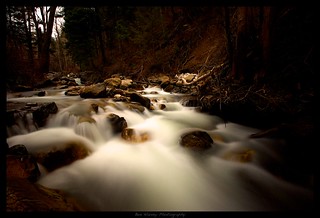
Photo by Ben Harvey
As we near the end of the school year, my upper level students will take on more of the teaching load. For example my advanced photo students are going to produce videos that profile their expertise. I've been planning the activity for a while, but when Ben (a student in the class) showed us the recent video he shot while he was photographing his water blur series, it became clear that the many talented photographers I work with every day need to become mentors.

Some of the things they'll teach:
Sports action - Alex, Jeannie
Tyler - how to light and shoot studio portraits
Sylvia - environmental portraits
Ben - long exposure
Photo apps - (Abby & Zoe)
Christina - wildlife
Josh - perspective
Pets - Rachel, Shea
Danny - landscape
Kyra - gourmet macros